Apidog Docs
🇺🇸 English
  • 🇺🇸 English
  • 🇯🇵 日本語
HomeLearning Center
Support CenterAPI ReferencesDownloadChangelog
HomeLearning Center
Support CenterAPI ReferencesDownloadChangelog
Discord Community
Slack Community
X / Twitter
🇺🇸 English
  • 🇺🇸 English
  • 🇯🇵 日本語
🇺🇸 English
  • 🇺🇸 English
  • 🇯🇵 日本語
  1. Publish API Docs
  • Apidog Learning Center
  • Getting Started
    • Introduction to Apidog
    • Basic Concepts in Apidog
    • Navigating Apidog
    • Quick Start
      • Overview
      • Creating an Endpoint
      • Making a Request
      • Adding an Assertion
      • Creating Test Scenarios
      • Sharing API Documentation
      • Explore More
    • Migration to Apidog
      • Overview
      • Manual Import
      • Scheduled Import (Bind Data Sources)
      • Import Options
      • Export Data
      • Import From
        • Import from Postman
        • Import OpenAPI Spec
        • Import cURL
        • Import Markdowns
        • Import from Insomnia
        • Import from apiDoc
        • Import .har File
        • Import WSDL
  • Design APIs
    • Overview
    • Create a New API Project
    • Endpoint Basics
    • APl Design Guidelines
    • Module
    • Configure Multiple Request Body Examples
    • Components
    • Common Fields
    • Global Parameters
    • Endpoint Change History
    • Comments
    • Batch Endpoint Management
    • Custom Protocol API
    • Schemas
      • Overview
      • Create a New Schema
      • Build a Schema
      • Generate Schemas from JSON Etc
      • oneOf, allOf, anyOf
      • Using Discriminator
    • Security Schemes
      • Overview
      • Create a Security Scheme
      • Use the Security Scheme
      • Security Scheme in Online Documentation
    • Advanced Features
      • Custom Endpoint Fields
      • Associated Test Scenarios
      • Endpoint Status
      • Appearance of Parameter Lists
      • Endpoint Unique Identification
  • Develop and Debug APIs
    • Overview
    • Generating Requests
    • Sending Requests
    • Debugging Cases
    • Test Cases
    • Dynamic Values
    • Validating Responses
    • Design-First vs Request-First
    • Generating Code
    • Environments & Variables
      • Overview
      • Environment Management
      • Using Variables
    • Vault Secrets
      • Overview
      • HashiCorp Vault
      • Azure Key Vault
      • AWS Secrets Manager
    • Pre and Post Processors
      • Assertion
      • Extract Variable
      • Wait
      • Overview
      • Database Operations
        • Overview
        • MySQL
        • MongoDB
        • Redis
        • Oracle Client
      • Using Scripts
        • Overview
        • Pre Processor Scripts
        • Post Processor Scripts
        • Public Scripts
        • Postman Scripts Reference
        • Calling Other Programming Languages
        • Using JS Libraries
        • Visualizing Responses
        • Script Examples
          • Assertion Scripts
          • Using Variables
          • Modifying Requests
          • Other Examples
    • Dynamic Values Modules
  • Mock API Data
    • Overview
    • Smart Mock
    • Custom Mock
    • Mock Priority Sequence
    • Mock Scripts
    • Cloud Mock
    • Self-Hosted Runner Mock
    • Mock Language (Locales)
  • API Testing
    • Overview
    • Test Scenarios
      • Create a Test Scenario
      • Pass Data Between Requests
      • Flow Control Conditions
      • Sync Data from Endpoints and Endpoint Cases
      • Import Endpoints and Endpoint Cases from Other Projects
      • Export Test Scenarios
    • Run Test Scenarios
      • Run a Test Scenario
      • Run Test Scenarios in Batch
      • Manage Runtime Environment of APIs from Other Projects
      • Data-Driven Testing
      • Scheduled Tasks
    • Test Suite
      • Overview
      • Create A Test Suite
      • Orchestrate Test Suite
      • Run Test Suites Locally
      • Run Test Suites Via CLI
      • Scheduled tasks
    • Test Reports
      • Test Reports
    • Test APIs
      • Integration Testing
      • Performance Testing
      • End-to-End Testing
      • Regression Testing
      • Contract Testing
    • Apidog CLI
      • Overview
      • Installing and Running Apidog CLI
      • Apidog CLI Options
    • CI CD
      • Overview
      • Integrate with Gitlab
      • Integrate with Jenkins
      • Trigger Test by Git Commit
      • Integrate with Github Actions
  • Publish API Docs
    • Overview
    • API Technologies Supported
    • Quick Share
    • Viewing API Documentation
    • Markdown Documentation
    • Publishing Documentation Sites
    • Custom Layouts
    • Custom CSS, JavaScript, HTML
    • Custom Domain
    • LLM-Friendly Features
    • SEO Settings
    • Advanced Settings
      • Documentation Search
      • CORS Proxy
      • Integrating Google Analytics with Doc Sites
      • Folder Tree Settings
      • Visibility Settings
      • Embedding Values in Document URLs
    • API Versions
      • Overview
      • Creating API Versions
      • Publishing API Versions
      • Sharing Endpoints with API Versions
  • Send Requests
    • Overview
    • SSE Debugging
    • MCP Client
    • Socket.IO
    • WebSocket
    • Webhook
    • SOAP or WebService
    • GraphQL
    • gRPC
    • Use Request Proxy Agents for Debugging
    • Create Requests
      • Request History
      • Request Basics
      • Parameters and Body
      • Request Headers
      • Request Settings
      • Debug Requests
      • Saving Requests as Endpoints
      • HTTP/2
    • Response and Cookies
      • Viewing API Responses
      • Managing Cookies
      • Overview
    • Authentication and Authorization
      • Overview
      • CA and Client Certificates
      • Authorization Types
      • Digest Auth
      • OAuth 1.0
      • OAuth 2.0
      • Hawk Authentication
      • Kerberos
      • NTLM
      • Akamai EdgeGrid
  • Branches
    • Overview
    • Creating a Sprint Branch
    • Testing APIs in a Branch
    • Designing APIs in a Branch
    • Merging Sprint Branches
    • Managing Sprint Branches
  • AI Features
    • Overview
    • Enabling AI Features
    • Generating Test Cases
    • Modifying Schemas with AI
    • Endpoint Compliance Check
    • API Documentation Completeness Check
    • AI-Powered Field Naming
    • FAQs
  • Apidog MCP Server
    • Overview
    • Connect Apidog Project to AI
    • Connect Published Documentation to AI
    • Connect OpenAPI Files to AI
  • Best Practices
    • Handling API Signatures
    • Accessing OAuth 2.0 Protected APIs
    • Collaboration Workflow
    • Managing Authentication State
  • Offline Space
    • Overview
  • Administration
    • Managing Teams
      • Managing Teams
      • Managing Team Members
      • Member Roles & Permission Settings
      • Team Activities
      • Team Resources
        • General Runner
        • Team Variables
        • Request Proxy Agent
      • Real-time Collaborations
        • Team Collaboration
    • Onboarding Checklist
      • Basic Concepts
      • Onboarding Guide
    • Managing Projects
      • Managing Projects
      • Managing Project Members
      • Notification Settings
      • Project Resources
        • Database Connection
        • Git Connection
    • Managing Organization
      • Managing Organization
      • Single Sign-On (SSO)
        • SSO Overview
        • Configuring Microsoft Entra ID
        • Configuring Okta
        • Configuring SSO for an Organization
        • Managing User Accounts
        • Mapping Groups to Teams
      • SCIM Provisioning
        • Introduction to SCIM Provisioning
        • Microsoft Entra ID
        • Okta
      • Plans Management
        • Billing Managers in Organizations
      • Organization Resources
        • Self-Hosted Runner
  • Billing
    • Overview
    • Credits
    • Unable to use credit cards
    • Managing subscriptions
    • Upgrade plan
    • How to move a paid team to a organization
  • Data & Security
    • Apidog data storage location and security
    • User data privacy and storage location
    • Request routing and data security
  • Add-ons
    • API Hub
    • Apidog Intellij IDEA plugin
    • Browser Extension
      • Chrome
      • Microsoft Edge
    • Request Proxy
      • Request proxy in Apidog web
      • Request proxy in shared docs
      • Request proxy in Apidog client
  • Account & preferences
    • Account settings
    • Generate OpenAPI access token
    • Notification
    • Language settings
    • Hot keys
    • Network proxy configuration
    • Data backup
    • Updating Apidog
    • Deleting account
    • Experimental Features
  • References
    • API-Design First Approach
    • Apidog OpenAPI Specificaiton Extensions
    • JSONPath
    • XPath
    • Regular Expressions
    • JSON Schema
    • CSV File Format
    • Install Java Environment
    • Runner deployment environment
    • Apidog flavored Markdown
  • Apidog Europe
    • Apidog Europe
  • Support Center
HomeLearning Center
Support CenterAPI ReferencesDownloadChangelog
HomeLearning Center
Support CenterAPI ReferencesDownloadChangelog
Discord Community
Slack Community
X / Twitter
🇺🇸 English
  • 🇺🇸 English
  • 🇯🇵 日本語
🇺🇸 English
  • 🇺🇸 English
  • 🇯🇵 日本語
  1. Publish API Docs

LLM-Friendly Features

Make your API documentation AI-ready with LLM-friendly features that enable seamless integration with AI assistants and development tools. These features help developers leverage AI tools like Cursor, Cline, and other LLM-powered IDEs to accelerate API integration and code generation.
Version Requirement
Apidog version must be ≥ 2.7.2 to access these features.
To enable these features: Navigate to Publish Docs → Publish Docs Sites → LLM-friendly Features.
CleanShot 2025-12-29 at 17.32.26@2x.png

Enable MCP (Model Context Protocol)#

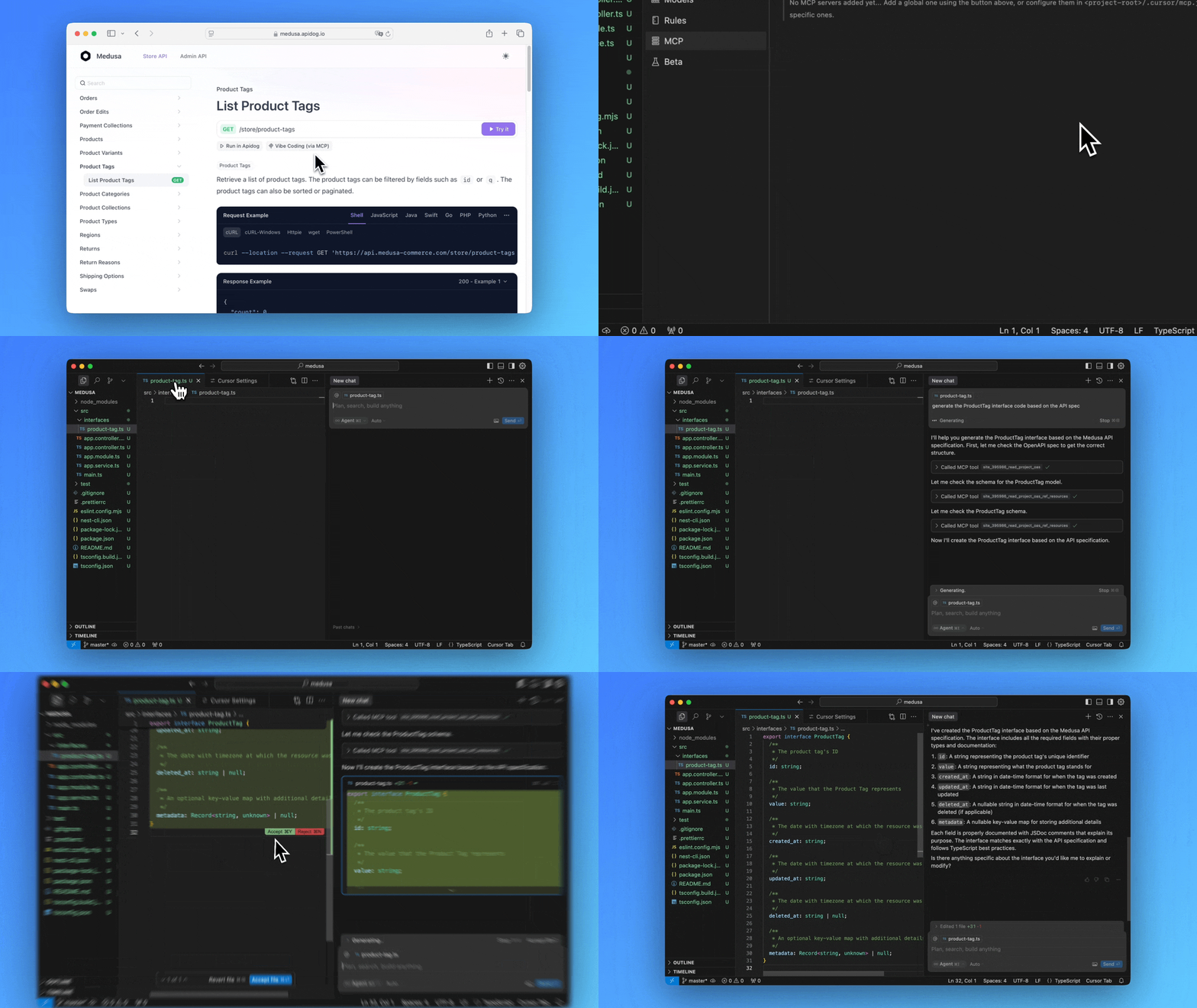
When enabled, an "MCP" button appears in your documentation, guiding users on how to connect your API documentation to MCP-enabled IDEs such as Cursor and Cline. This allows Agentic AI to assist with code generation directly from your API documentation.
Learn More
For detailed setup instructions, read: Connect Online API Documentation Published by Apidog to AI via Apidog MCP Server.
Apidog MCP Server

Enable Copy Page#

When enabled, a "Copy page" button appears in your documentation, allowing users to copy the current page as Markdown format—perfect for pasting into LLM conversations.
copy-page.png

Enable llms.txt#

When enabled, a llms.txt Markdown file is automatically generated in the root directory of your documentation site. This file contains links to every Markdown page with concise descriptions, making it easy for AI assistants to discover and navigate your documentation.
Example:
llms-txt.png

How AI Assistants Use llms.txt#

There are two common methods for using llms.txt and related Markdown files:
1. Share Markdown links with AI assistants that can access URLs
Each online documentation page published via Apidog has a Markdown version. You can:
Add ".md" to any doc URL (e.g., https://example.apidog.io/page.md)
Or click "View as Markdown" in the online documentation
Add-.md-to-any-doc-URL.png
AI assistants with Web Browsing capabilities can use these ".md" URLs to retrieve concise documentation.
For example, in Cursor, you can ask "Understand this info: @https://zojphlasi1.apidog.io/find-pet-by-id-12888653e0.md and help me generate a TypeScript client".
usage example using Cursor.png
Prompt Format
The prompt format must follow the specific rules of the AI tool being used. For instance, in Cursor, URLs must begin with @ to be recognized as context.
2. Copy Markdown content for AI assistants that can't access URLs
If the AI assistant cannot access content via URL, you need to copy and paste the Markdown content manually.
image.png
Click the "Copy Page" button in the online documentation to get the current page content in Markdown format, then paste it into your conversation with the AI assistant.
Example prompt:
"Based on this endpoint definition, please generate a TypeScript client: (paste the copied content here)."
image.png

FAQs#

Does enabling LLMs.txt affect documentation security?
No. llms.txt only includes content that has already been publicly published. It simply converts HTML to Markdown and does not expose private or unpublished documentation. If access control (password, IP allowlist, email allowlist, etc.) is configured, users must still pass authentication to access llms.txt and Markdown files.
Can I use LLMs.txt if my docs are protected by password, IP, or email allowlist??
Why don't I see the button `Copy Page` in Apidog App?
I’ve enabled 'Web Search' feature for my AI assistant. Why can’t it read the web page content via URL?
What should I do if the AI assistant fails to access the Markdown file via URL?
Do I need to do anything else after enabling LLMs.txt?
How can I verify that LLMs.txt is working properly?
Modified at 2026-01-21 04:09:01
Previous
Custom Domain
Next
SEO Settings
Built with